Let Us Be Counted!," the UUs for Jewish Awareness conference in Atlanta continues to stir in me, causing me to reflect on our living UU tradition. The conference was distinctly UU and distinctly Jewish!
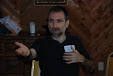
Apparently, the fact that there are UUs who also identify as Jewish boggles people's minds. Even among UUs there seems to be a lot of anxiety about people with multiple, mixed or fluid identities suggested keynote presenter Dr Ibrahim Farajaje of Starr King School for the Ministry (SKSM). Farajaje' stated that the “mixities” and cross cultural influences between Unitarians and Jews date back to the16th century in Europe.
Dr. Farajaje' also reported that cultural competency has improved at SKSM as a result of multiculturalism among the student population. His keynote suggests to me that my alma mater has retained much of the philosophy that guided the institution during the 80's. SKSM wanted to prepare ministers to lead UU congregations to embrace every person as a potential source of divine revelation, as someone who could make profound contributions to the spiritual growth of the community. SKSM delivered this lesson in the way things were done. At SKSM, students taught seminary classes, and served on the board of trustees. The school helped make it possible for students to contribute to the community and to each other's preparation for ministry.
Farajaje told of lessons that arose as a result of having 3 Jewish identified UU seminarians in the same graduating class. For several years SKSM graduation had taken place on a Friday night. In discussions at SKSM, it came to light that the students' Jewish family members would not attend graduation if it occurred on "Shabbat." Graduation was moved to Thursday night and remains there still. This wasn't about making UU Jewish. It was about helping the seminary to stay UU, to remain consistent with UU values.
Dr. Farajaje' also shared a story of a Starr King student who led a chapel celebrating Rosh Hashana, the Jewish New Year. As is Jewish custom, she placed on the altar apples and honey for people to eat at the conclusion of the service. She explain the significance of the tradition; wishing each other a sweet year ahead! She also did something that made the service characteristically UU. Rosh Hashana fell during Ramadan that year. During Ramadan, Muslims fast during the day. Knowing this, the service leader set aside some apples and honey on the altar for anyone who might be observing Ramadan to take with them for their nightime meal. Ibrahim said that people were really moved by the thoughtfulness, consideration and intention to be inclusive. I feel tears well inside me as I consider the clarity of the intention to establish the beloved community.
Farajaje said “When you plan an event, consider who the event is for. Are you doing something for your little group?, or for the entire congregation?” Robin Kottman, a leader from the "L'Chaim group" at the UU Congregation of Atlanta said that this principle had been responsible for their group's success. She said that they actively resisted beified as a group for UU Jews. From the onset, their intention was to be a group for UUs for Jewish Awareness. They found that many people were eager to learn, explore or celebrate Jewish traditions in a UU context. Many benefited bcause L'Chaim planned events with the entire congregation in mind.
I pray that we will all learn from their example!
Showing posts with label Jewish Awareness. Show all posts
Showing posts with label Jewish Awareness. Show all posts
Monday, February 28, 2011

Sunday, February 20, 2011
All Our JUUwishness
All of us counts. All of the ways that we find to be who we are in this world, all of it counts. This was the message we received at the “Let Us Be Counted” Uus for Jewish Awareness Conference in Atlanta this weekend. It was a message that came home because of our experience of coming together.
UUJA President Rev. Leah Hart-Landsberg helped set the tone for our time together during opening worship. She referred to the “parsha” (torah portion) of the week that instructed ancient Hebrews how to build a sanctuary. “We will be building a sanctuary too,”she said. How right she was!
Personally I was gratified to see the influence that my alma mater, Thomas Starr King School for the Ministry had in the creation of this conference. Hart-Landsberg, and most of the planning team were SKSM graduates, and SKSM prof Dr. Ibrahim Farajaje' delivered the conference keynote address. (Thank you SKSM and President Rebecca Parker whose discretionary funds made that keynote possible.) Dr. Farajaje's presentation brought to the conference a precious aspect of Starr King culture. Beyond theology, I remember SK as a place that enriched its seminarians with an affirming sense of the sacredness of being. Learning how to bring this quality out in a community or congregational setting was a priceless aspect of preparation for ministry.
The quality of our gathering had many contributors. There was generous hosting of the UU Congretion of Atlanta (UUCA), Rev. Marti Keller, and the UUCA's L'Chaim group for Jewish Awareness. We enjoyed an abundance of Jewish music, the professional support of UUCA's Music director, Donald Milton III and performances by the combined choirs of UUCA and Bet Haverim. (BH is a Reconstructionist Congregation founded by lesbians and gays.)
Dr. Farajaje refered to the conference as a “Shabbaton,” a weekend retreat that focuses on a communal sharing of Shabbat. During the weekend, we shared the “mixities” of how we identify; the communities we belong to or hail from, and what continues to contributes to our journeys toward wholeness. We joined in the sharing of stories, prayers, poems, singing and music. We shared our selves, and were enriched by the sharing. It was an experience that affirmed who we are- beyond and through acquired identities. My partner from our havurah (study group), found the conference as “affirming not because there is a rule that exists among Uus that says we must accept each other, but because I experienced people here as being open, that they actually cared to find out who I am, and that they were willing to share with me something of who they are too.”
Sunday morning before the worship service, we sat and talked about what we had received. We said things like: “I know now that I am not alone.” “I thought being a UU Jew was something that I created.” “ I thought it was a figment of my imagination,” or “something that really wasn't supposed to exist, “ “Until now, I've hidden my love of being Jewishness out of fear of being perceived as cheating on my UU Church” “Many UUs seem to think that identifying as Jewish means that we're not really or fully UU. I'll never believe that again!” Each of us grew in awareness of the profound influence that Judaism, our relationship to Jewish people and cultures has had and continues to have on our living UU tradition. The ripples of our coming together, of our learning and our celebrating our JUUwishness will be felt throughout the UU world!
UUJA President Rev. Leah Hart-Landsberg helped set the tone for our time together during opening worship. She referred to the “parsha” (torah portion) of the week that instructed ancient Hebrews how to build a sanctuary. “We will be building a sanctuary too,”she said. How right she was!
Personally I was gratified to see the influence that my alma mater, Thomas Starr King School for the Ministry had in the creation of this conference. Hart-Landsberg, and most of the planning team were SKSM graduates, and SKSM prof Dr. Ibrahim Farajaje' delivered the conference keynote address. (Thank you SKSM and President Rebecca Parker whose discretionary funds made that keynote possible.) Dr. Farajaje's presentation brought to the conference a precious aspect of Starr King culture. Beyond theology, I remember SK as a place that enriched its seminarians with an affirming sense of the sacredness of being. Learning how to bring this quality out in a community or congregational setting was a priceless aspect of preparation for ministry.
The quality of our gathering had many contributors. There was generous hosting of the UU Congretion of Atlanta (UUCA), Rev. Marti Keller, and the UUCA's L'Chaim group for Jewish Awareness. We enjoyed an abundance of Jewish music, the professional support of UUCA's Music director, Donald Milton III and performances by the combined choirs of UUCA and Bet Haverim. (BH is a Reconstructionist Congregation founded by lesbians and gays.)
Dr. Farajaje refered to the conference as a “Shabbaton,” a weekend retreat that focuses on a communal sharing of Shabbat. During the weekend, we shared the “mixities” of how we identify; the communities we belong to or hail from, and what continues to contributes to our journeys toward wholeness. We joined in the sharing of stories, prayers, poems, singing and music. We shared our selves, and were enriched by the sharing. It was an experience that affirmed who we are- beyond and through acquired identities. My partner from our havurah (study group), found the conference as “affirming not because there is a rule that exists among Uus that says we must accept each other, but because I experienced people here as being open, that they actually cared to find out who I am, and that they were willing to share with me something of who they are too.”
Sunday morning before the worship service, we sat and talked about what we had received. We said things like: “I know now that I am not alone.” “I thought being a UU Jew was something that I created.” “ I thought it was a figment of my imagination,” or “something that really wasn't supposed to exist, “ “Until now, I've hidden my love of being Jewishness out of fear of being perceived as cheating on my UU Church” “Many UUs seem to think that identifying as Jewish means that we're not really or fully UU. I'll never believe that again!” Each of us grew in awareness of the profound influence that Judaism, our relationship to Jewish people and cultures has had and continues to have on our living UU tradition. The ripples of our coming together, of our learning and our celebrating our JUUwishness will be felt throughout the UU world!
Saturday, February 5, 2011
Issues Arise as UUJA Conference nears
“Let Us Be Counted” a conference for Uus for Jewish awareness is two weeks away. This week the UUJA e-list has suddenly lit up like a... Chanuka bush. UU Jews and UUs of Jewish heritage are expressing excitement, and anticipation of experiencing shared values, common understandings, engagement and celebration.
Connection is made sweet by empathy, an intuitive grasp of another's pain or joy. I'm guessing that UUJA members are eager to meet with others who know intimately what it's like to be UU Jews or UUs of Jewish heritage.
I have experienced (since '83) a tension being my identities as a UU and a Jew. Over the years I learned how to share my Jewishness in a way that increases the chances of understanding and appreciation. I've had also repeatedly experienced a cultural gap that I've taken as part of the cost of participation in this religious movement.
From my first days I found that UU literature expressed the beliefs and values that I was raised with as a liberal Jew, but the assumption has seemed to be that these ideas and values were the creation and the property of a group of former Christians, liberal Christians and descendants of Christians. My impression is that as UUs we see ourselves as an elite group of people who have been smart enough to claim only the sensible aspects of Christianity. The fact that only a minority of UUs identify as Christians doesn't alter this orientation. Rarely has Judaism or Jewishness been seen as part of who we are. It's been painful at times to experience the lack of understanding,the invisibility of the influence that Jewish beliefs and values have had upon our UU tradition.
For example, the idea that began the Unitarian movement was the Unity (rather than the trinity) of God. Channing in the sermon that is credited for the claiming of the name Unitarian in America, said: "we follow the religion of Jesus, not the religion about Jesus." How often has this passage been read by us? And how seldom has it been mentioned that the Unitarians and the Universalists were returning to a faith congruent with Judaism?
More personally challenging has been the way that the assumptions about who we are play out in our movement. Despite having UU values, having fairly classical Unitarian and Universalist theological beliefs, and despite a high degree of identification with "progressive culture," I have too often had the impression that I'm still not one of the the right kinds of people, not one of the "us." For years my internalized conditioning from being raised Jewish had me think this was simply my personal issue. In time I came to understand that there are implicit messages, cultural assumptions about who we are, and sometimes they don't include UUs of Jewish orientation. For years I sensed the welcome of Jewishness as superficial, that there existed a don't ask don't tell policy w/ regards to sharing what was really meaningful as a UU Jew. I had the impression that I was expected (as an outsider) to be willing to make constant effort to fit into a culture that doesn't belong to me.
Since I have kept my mouth shut on this subject for most of my life, I may not be quite able to articulate what I've experienced perfectly. Even if I can't spell it out perfectly, will you be willing to trust that I might be expressing an intuitive knowledge of something real?
On the few times I have attempted to raise issues of welcome, culture and Jews belonging in our movement, I've generally been reminded that there are lots of UUs of Jewish heritage. I'm given the names of specific UU Ministers of Jewish heritage.
It's been my sense that until recently, the majority of UUs of Jewish heritage had little exposure to Jewish religion or culture. Until recently it seemed to me that those of Jewish heritage that "made it" into UU, have tended to be highly assimilated Jews. Others attitude toward Judaism seemed to assume that Judaism was the escaped Egypt, and UU the promised land of liberation.
Fortunately, in the past decade, I've experienced increasing numbers of UUS who claim or have interest in the spirituality and richness of Jewish traditions. For me UU is a place that theoretically allows me to be my religious hybrid self. I suspect that the upcoming gathering will help move us from “in theory” to “in practice.”
Connection is made sweet by empathy, an intuitive grasp of another's pain or joy. I'm guessing that UUJA members are eager to meet with others who know intimately what it's like to be UU Jews or UUs of Jewish heritage.
I have experienced (since '83) a tension being my identities as a UU and a Jew. Over the years I learned how to share my Jewishness in a way that increases the chances of understanding and appreciation. I've had also repeatedly experienced a cultural gap that I've taken as part of the cost of participation in this religious movement.
From my first days I found that UU literature expressed the beliefs and values that I was raised with as a liberal Jew, but the assumption has seemed to be that these ideas and values were the creation and the property of a group of former Christians, liberal Christians and descendants of Christians. My impression is that as UUs we see ourselves as an elite group of people who have been smart enough to claim only the sensible aspects of Christianity. The fact that only a minority of UUs identify as Christians doesn't alter this orientation. Rarely has Judaism or Jewishness been seen as part of who we are. It's been painful at times to experience the lack of understanding,the invisibility of the influence that Jewish beliefs and values have had upon our UU tradition.
For example, the idea that began the Unitarian movement was the Unity (rather than the trinity) of God. Channing in the sermon that is credited for the claiming of the name Unitarian in America, said: "we follow the religion of Jesus, not the religion about Jesus." How often has this passage been read by us? And how seldom has it been mentioned that the Unitarians and the Universalists were returning to a faith congruent with Judaism?
More personally challenging has been the way that the assumptions about who we are play out in our movement. Despite having UU values, having fairly classical Unitarian and Universalist theological beliefs, and despite a high degree of identification with "progressive culture," I have too often had the impression that I'm still not one of the the right kinds of people, not one of the "us." For years my internalized conditioning from being raised Jewish had me think this was simply my personal issue. In time I came to understand that there are implicit messages, cultural assumptions about who we are, and sometimes they don't include UUs of Jewish orientation. For years I sensed the welcome of Jewishness as superficial, that there existed a don't ask don't tell policy w/ regards to sharing what was really meaningful as a UU Jew. I had the impression that I was expected (as an outsider) to be willing to make constant effort to fit into a culture that doesn't belong to me.
Since I have kept my mouth shut on this subject for most of my life, I may not be quite able to articulate what I've experienced perfectly. Even if I can't spell it out perfectly, will you be willing to trust that I might be expressing an intuitive knowledge of something real?
On the few times I have attempted to raise issues of welcome, culture and Jews belonging in our movement, I've generally been reminded that there are lots of UUs of Jewish heritage. I'm given the names of specific UU Ministers of Jewish heritage.
It's been my sense that until recently, the majority of UUs of Jewish heritage had little exposure to Jewish religion or culture. Until recently it seemed to me that those of Jewish heritage that "made it" into UU, have tended to be highly assimilated Jews. Others attitude toward Judaism seemed to assume that Judaism was the escaped Egypt, and UU the promised land of liberation.
Fortunately, in the past decade, I've experienced increasing numbers of UUS who claim or have interest in the spirituality and richness of Jewish traditions. For me UU is a place that theoretically allows me to be my religious hybrid self. I suspect that the upcoming gathering will help move us from “in theory” to “in practice.”
Subscribe to:
Posts (Atom)